5wins: Designing a Scalable Women's Sports Fan Ecosystem
Building a cohesive product ecosystem for a women's sports entertainment platform, from bracket challenges to athlete ambassador programs.
- Product Design
- Design Systems
- Information Architecture
My Role
Product Designer / Design Lead (sole Product Designer)
Timeline
2024–Present
Tools
Figma / FigJam / Notion / Miro / HTML & CSS
Overview. 5wins is a women's sports entertainment platform built to bring fans closer to the teams, athletes, events, and communities they care about. As the sole Product Designer, I've worked across UX research, information architecture, interaction design, high-fidelity UI, and design systems, building a cohesive product ecosystem as 5wins expanded into women's college sports, sports-bar communities, bracket challenges, and athlete engagement programs.
The Challenge
The platform needed a design foundation flexible enough to support new features without a full redesign every time something changed, across multiple audiences (fans, bars, athletes, partners), digital and real-world experiences, and close collaboration with engineering and leadership.
The Broader Ecosystem
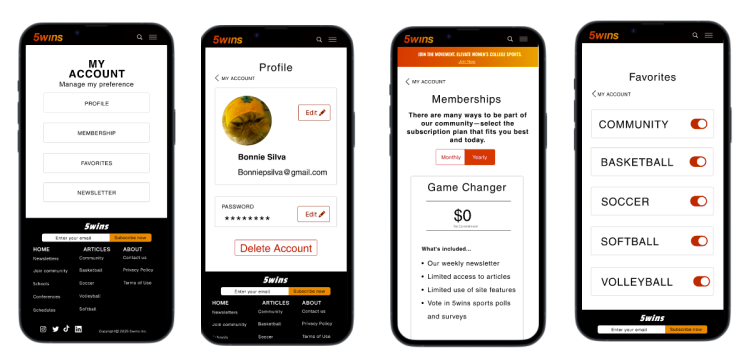
Rather than designing isolated screens, my focus has been building a cohesive product ecosystem, one that could scale as 5wins expanded from a content platform into women's college sports, sports-bar communities, bracket challenges, and athlete programs.
- 5WINS
- Women's Sports
- Basketball
- Softball
- Volleyball
- Bracket Challenges
- Fans + Data
- Newsletter
- Athlete Programs
- Fan Community
- Bars
- Events
Women's Sports Bar League (WSBL)
Connecting fans with local bars to build communities around watching women's sports, spanning watch parties, bracket challenges, QR-driven participation, and newsletter growth.
Bracket Challenges
Reusable, scalable structures for participating bars, growing from roughly 60 participants to nearly 100, with participant data becoming a real part of the pitch to potential partners.
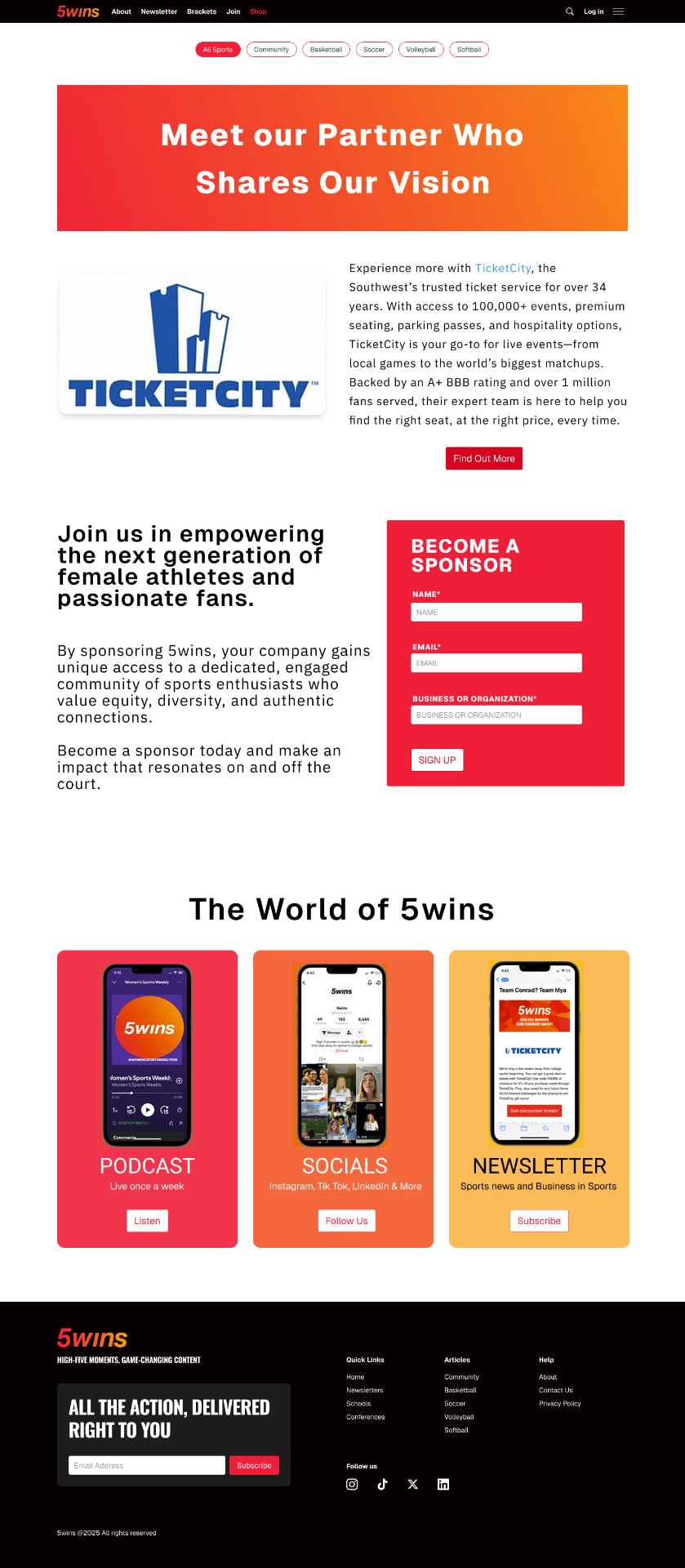
Sponsor Page
A public sponsorship page that framed early partner involvement as a credibility signal and growth story, rather than reading as a lone logo on an empty page.
Deep Dive: The NIL Athlete Ambassador Program
5wins runs an NIL (Name, Image, Likeness) Ambassador program to help women's college athletes build their personal brand. When this work began, it existed only as a business idea, no defined experience behind it. I was handed an open-ended brief: think about the whole ecosystem.
The Challenge
There was no existing information architecture, the business model existed but the experience didn't. Parallel design exploration was happening elsewhere on the team, and business and legal constraints only surfaced through ongoing stakeholder conversations, reshaping what the product could say and do along the way.
Process
- 01
Mapped the full ecosystem before touching a single screen, tracing how athletes, ambassadors, sponsors, and revenue were meant to connect
- 02
Reality-tested that map against real wireframes as they developed, surfacing gaps between the original business pitch and what was actually being designed
- 03
Identified and resolved a structural naming conflict between two parallel concepts of "Ambassador," building a comparison framework to align on a single shared definition
- 04
Audited designs against assumptions, catching inconsistencies in filters, card hierarchy, and CTA language before they shipped
- 05
Refined the model through stakeholder feedback, narrowing the page count from four templates to three as the scope clarified
- 06
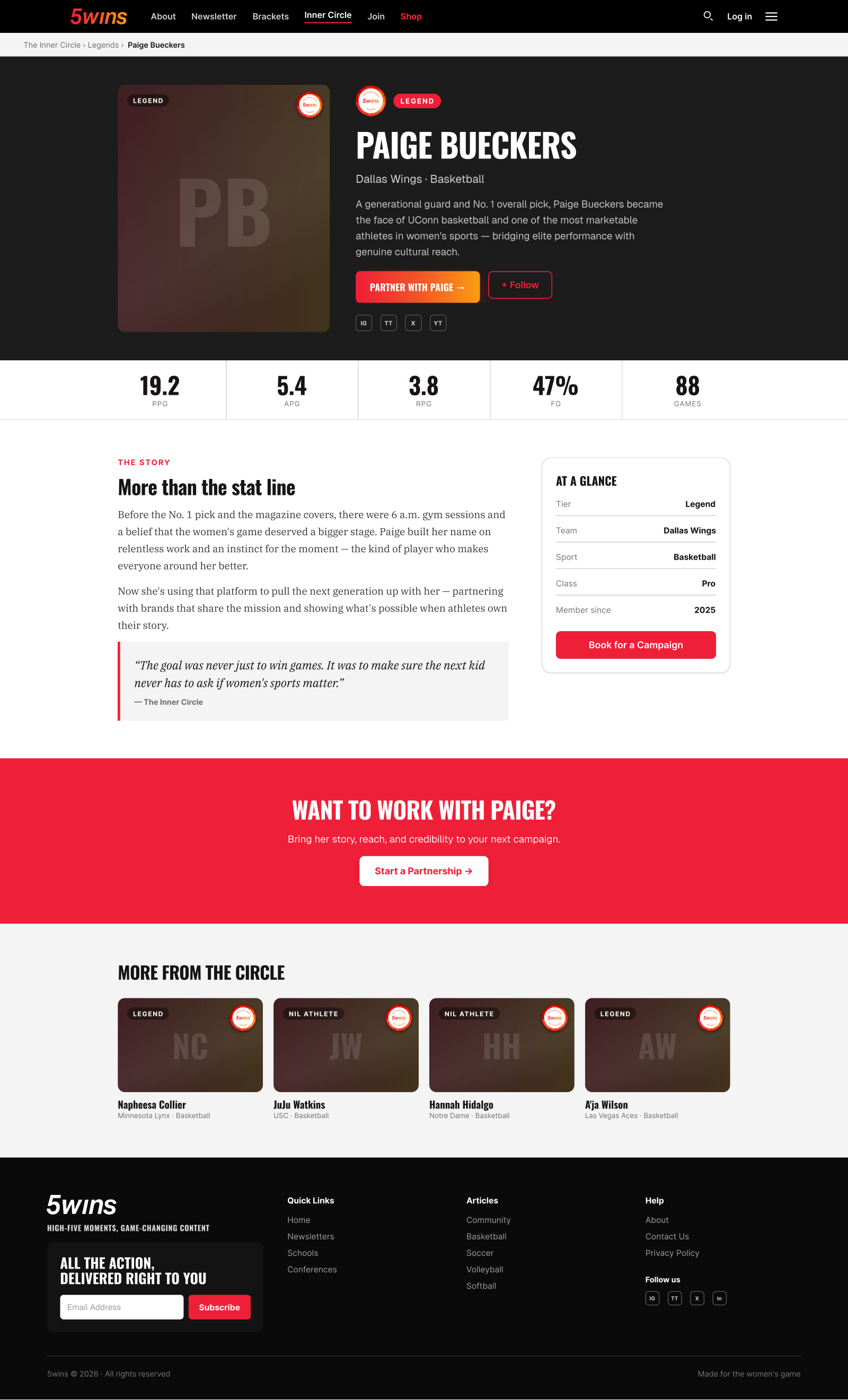
Led a final redesign pass across all confirmed page types: Landing, Ambassadors directory, and Profile pages
Final Deliverables
- Information architecture / sitemap
- Ecosystem map, revised against real product and business constraints
- Redesigned Landing, Ambassadors directory, and Profile page templates
- A documentation deck tracking open questions, decisions, and rationale at each stage
What I Learned
Design is about systems, not screens.
A successful experience has to account for everything surrounding the interface, not just what's on it.
Ambiguity is part of the job: a brief doesn't always arrive perfectly packaged, sometimes the designer has to help define the problem itself.
And terminology is a design problem, not just a writing one. A naming conflict between two people can mean two different products are being built under one label, and catching it early prevents much larger rework later.